By Zachariah Julian
I grew up on the Jicarilla Apache Nation in Northern New Mexico, surrounded by culture, community, and love. I remember the mountains, the songs of my medicine man, and the ceremonies. I keep those memories close. I left my nation in 2000 and moved to Santa Fe. I was an Apache on my own at 19. Talk about an eye-opening culture shock. I saw my culture, among others, packaged and sold instead of practiced and respected. I’d walk the plaza and see paintings of Crown Dancers in shop windows; I was taught that only a healer who practiced the traditional dances could paint their sacred image, but only for healing purposes. The paintings stood hollow with a flashy price tag.
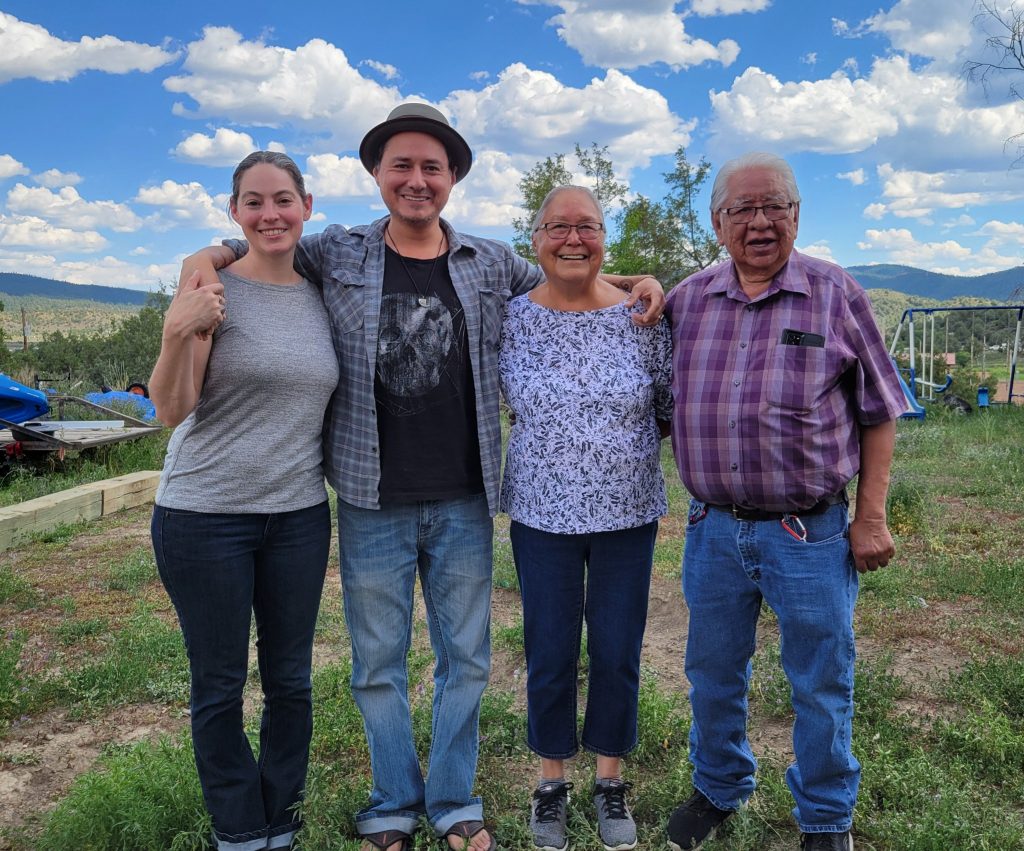
Display caption
Image: Zachariah Julian and family home on the Jicarilla Apache Nation. Credit: Zachariah Julian.
I got a job near the plaza. It was a corporate job, and when Thanksgiving rolled around, many of my coworkers asked me, “What do your people do for the holiday?” I didn’t know how to respond. It took me time to realize I was on the other side of the looking glass, living someone else’s culture. They were looking at me as a historical artifact, a seasonal curiosity to be questioned over a holiday meal. I learned to play along, same as you, and I carried on with my Native day.
In 2016, I met Tailinh Agoyo, and We Are the Seeds. Based in Philadelphia, Seeds was born to celebrate and amplify contemporary Indigenous arts and cultures. We refuse to let Indigenous creativity be relegated to history books, collecting dust. Together, we have built spaces like our annual Seeds Celebration + Powwow, our podcast From Here, With a View (which recently had the honor of receiving a Signal Award), and our Seeds Listening Garden; a literal sanctuary where the soil is healing, happy, and growing in West Philadelphia.
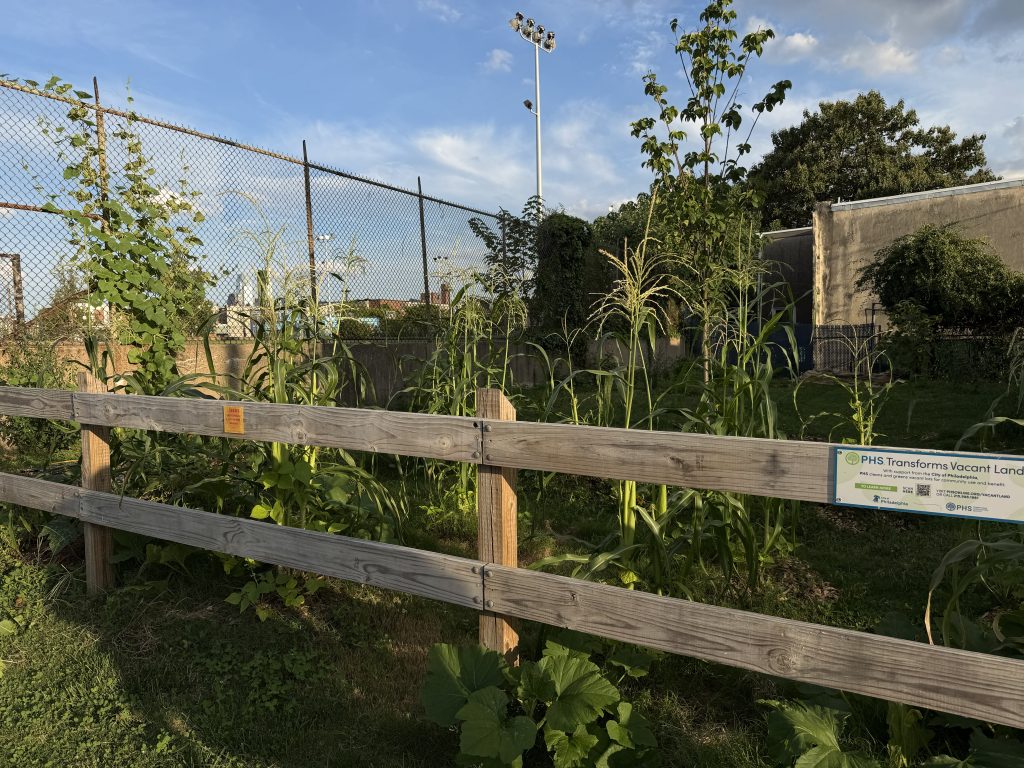
Display caption
Image: Seeds Listening Garden. Credit: Xiao Hui Star.
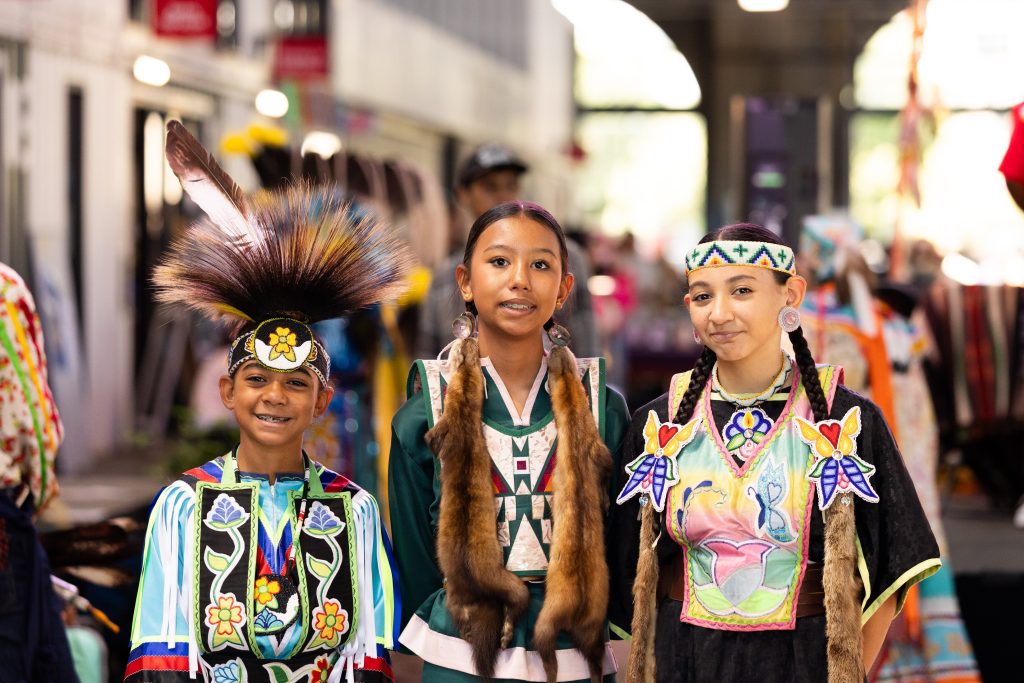
Display caption
Image: Seeds Celebration and Powwow 2025. Credit: Max McDonald.
A seed to me is an inheritance and a promise. I think of Ashawaug Farm, a family-run farm in Rhode Island focused on traditional Native planting methods. I spent a few days on the farm, filming Dawn Spears and Cassius Spears’ daily activities for We Are the Seeds. I shared dinner with the whole family, surrounded by generations of conversation, all sharing the love of the land. They told me their stories, good and bad; their resistance and knowledge are inspiring. Being on Ashawaug Farm changed me. Knocked something loose. The place reminded me of home; the mountains of the Jicarilla Nation. Same love.
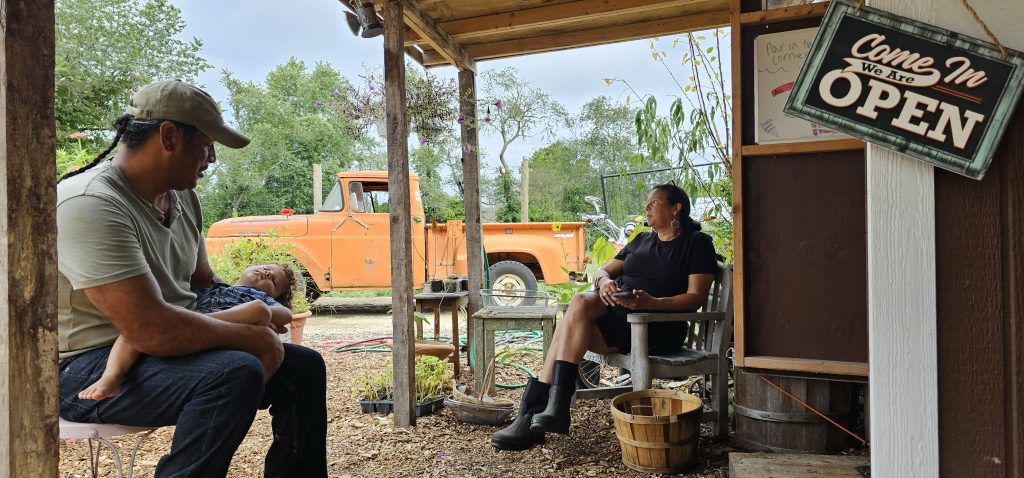
Display caption
Image: Dawn and Cassius Spears at Ashawaug Farm. Credit: Zachariah Julian.
I flew back home to New Mexico, changed. My music changed. That was three years ago, and over those years I’ve come to understand what it was I found at Ashawaug Farm. For years, I’ve held onto guilt for leaving the Jicarilla Apache Nation. I always felt that I left the best part of me there, but that’s not true. You cannot cage something that knows how to grow anywhere. Tradition has a way of holding on, a stubborn beauty we know too well; it keeps us young, a heartbeat only felt by those who know where to find it.
I have now lived outside of my Nation longer than I lived on it. Things have changed. Santa Fe has changed. I now see celebrated Indigenous television shows, plenty of Indigenous podcasts, contemporary Indigenous musicians like myself, and so many other professions finding space in the tapestry of our Indigeneity and communities. We are carrying the past forward. So, what do we do? How do we keep fighting back against erasure? I’d say it’s about supporting what Indigenous people are building on the ground, rather than having us exist on the periphery of pre-existing institutions and infrastructures. True amplification means backing Indigenous self-determination, not just offering a guest seat.
As a people, we shall keep planting the truth of our continuous existence, beyond the romanticism and stereotypes, so future generations can grow up surrounded by the same love and culture I had in the mountains.
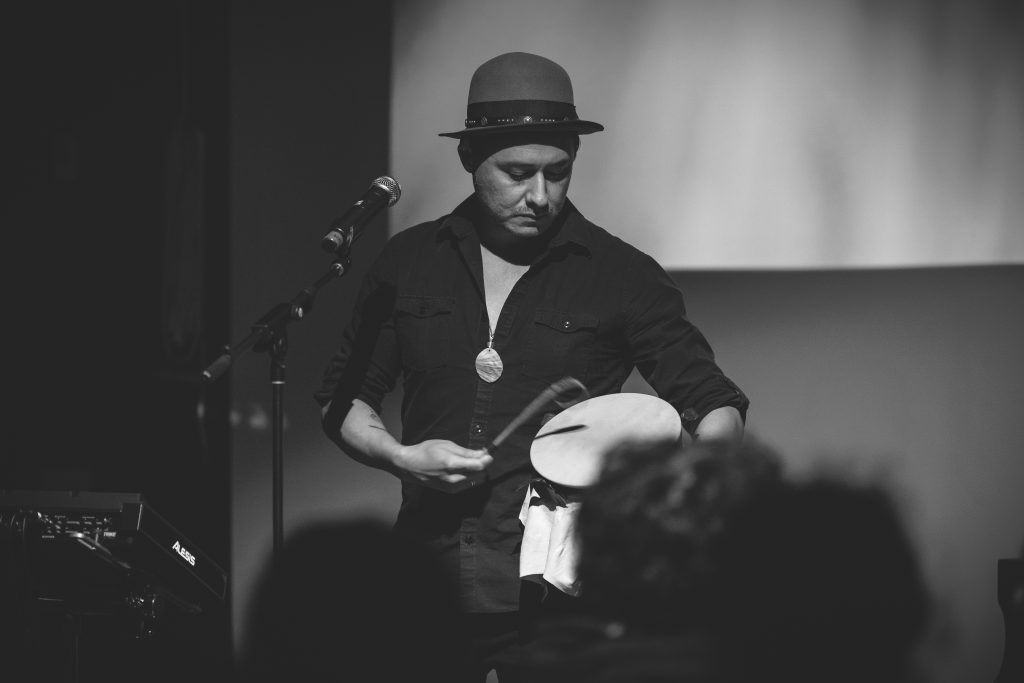
Display caption
Image: Zachariah performing at Beyond Glass Cases at Asian Arts Initiative. Credit: Max McDonald.