
Credits:
Written by Dolly Camareno
Edited by Dessane Lopez Cassell
Lee esta entrada de blog en español aquí.
Dulce and I have known each other for over 40 years, since Dulce came to the island to support families of students with special needs. We share a history of community activism, from aerobics classes for women to advocating for access to beaches. “We believe that safeguarding the community is also a means of defending the land”, Dulce tells me. These are not separate struggles.
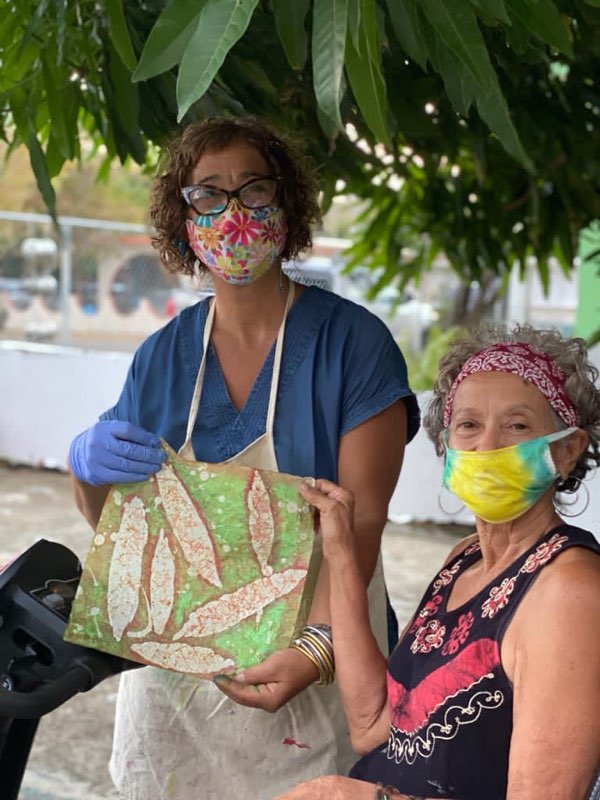
Display caption
Image: Dolly Camareno and participants at a Mujeres de Islas Batik workshop. Photo: Courtesy of Dolly Camareno.
That conviction is at the heart of our work with Women of the Islands. More than an organization, MDI is the result of long-standing relationships, everyday acts of solidarity, and a way of envisioning community development through listening and direct action. “MDI didn’t start as an isolated project,” Dulce explains, “it arose from daily life in Culebra, from what we wanted to care for and sustain.”
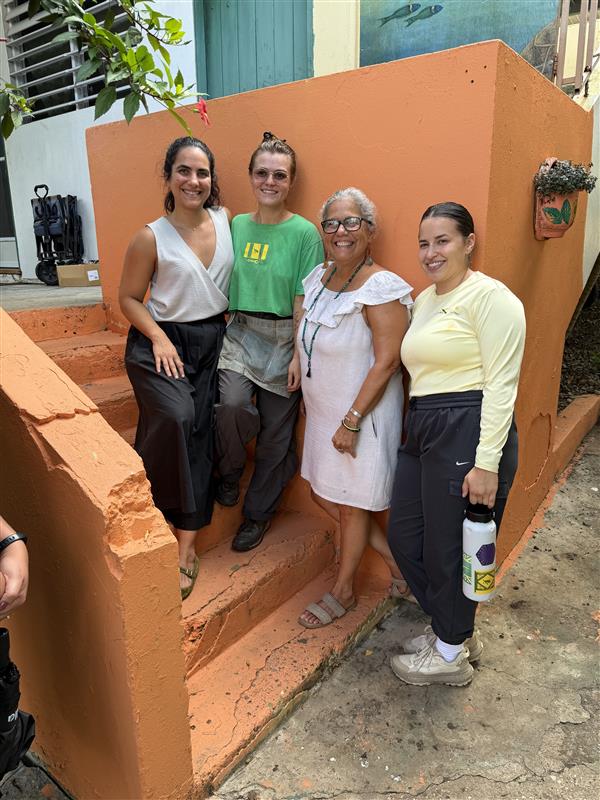
Display caption
The Mujeres de Islas’ team in their event space at la Antigua Escuela. Left to right: Sofía Reeser, Marissa Otero, Dulce del Río-Pineda, and Alexandría Rodríguez. Credit: Jacinto Salcedo.
MDI emerged in 2010 from roundtable meetings where women shared their dreams and aspirations for the island. Co-founder Sylvia Lleras proposed that each woman act as the driving force behind her own dream, with the others offering support. “That solidarity model continues to guide our work and the interconnection between projects,” Dulce shares. Initial goals included creating a more sustainable food supply, improving education and care for pregnant women and young children, and reviving the Tuyo y Mío Theater as a community space.
The process of revitalizing the theater demanded significant commitment and hard work. Dulce reflects, “This success was possible because of your vision, Dolly, along with the contribution of numerous individuals and local residents.” Having undergone years of renovation, the theater now serves as a vibrant hub for art appreciation programs and community engagement.
The foundational philosophy of Sede de Experiencias Vivas de Aprendizaje, or SEVA (Living Experiences Learning Center) was also established during those initial years. SEVA is committed to learning by doing, building, and creating; its name in Sanskrit means ‘to serve’. It is a pedagogical approach that connects all of MDI’s projects.
The restoration of the Antigua Escuela (Old School) and the beginning of what would become the Siembra Project (Sowing Project) began in 2014, focusing on food security, economic stability, and professional development. “We transformed land, once bombed by the Navy, into fertile and productive spaces.“When we began providing our services,” Dulce notes, “the name originally referred only to the physical area. However, it grew to represent something much larger: it is our core philosophy.” From SEVA, now located in the Antigua Escuela (Old School) and where MDI is headquartered, they promote home, school, and community gardens, composting, environmental education, and activities such as Cine Siembra (Sowing Cinema) and the Sazón (Flavor) solar kitchen, which connects art, food, and sustainability.
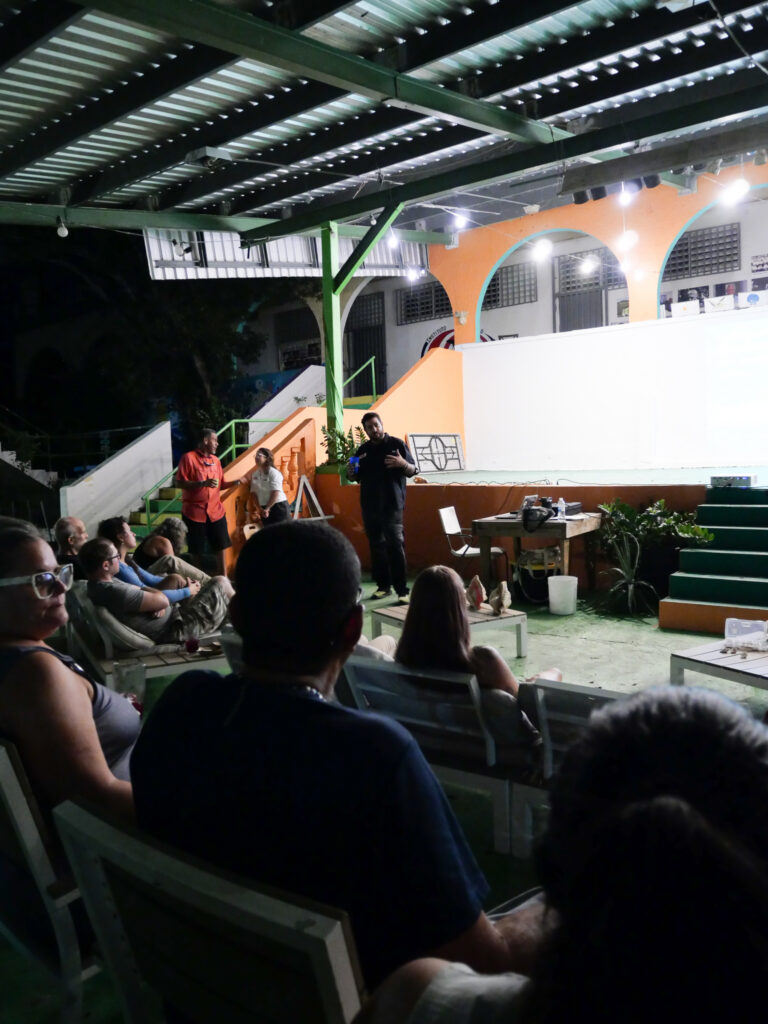
Display caption
Image: Mujeres de Islas’ Cine Siembra community event with a presentation on Acuicultura de Carrucho. Credit: Max Hernandez-Webster.
Food sovereignty and crisis response are essential to MDI. After Hurricanes Irma and Maria in 2017, the organization distributed food and offered workshops, elder care, wellness services, and creative activities. During the pandemic, hundreds of food boxes were delivered weekly, and after Hurricane Fiona, the Solidarity Fish Broth initiative was launched in collaboration with local fishermen. Today, MDI continues to ensure access to fresh and non-perishable food and develops innovative projects such as oyster farming.
Since 2018, the Solidarity Incubator (SIS) has supported over 60 participants, formalizing more than 25 local businesses, including the Culebra Fishing Association and the island’s first art brand, CulArt. The Solidarity Art Project (PAS) connects art with environmental justice, food sovereignty, and cultural preservation through artist residencies, workshops, and urban mosaics. As a Community Hub, MDI also provides shelter, drinking water, supplemental food, and portable charging and battery services. Another initiative is Comadres y Culebra les ve nacer (Godmothers and Culebra see them born), which supports pregnant women.
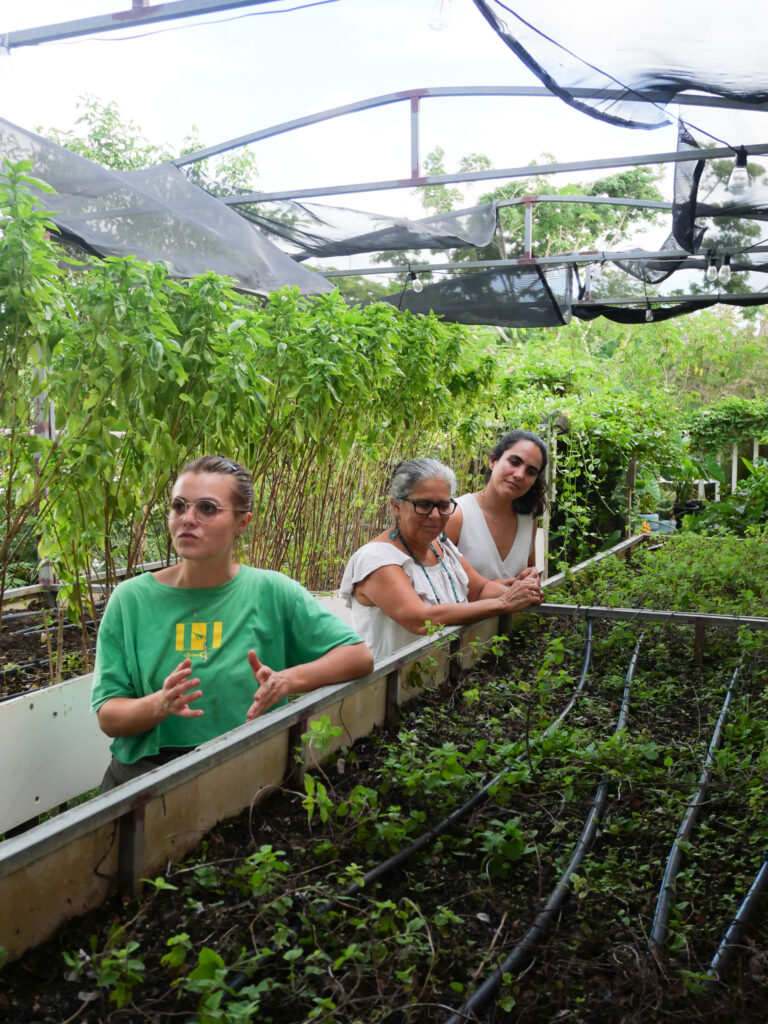
Display caption
Image: Marissa Otero, Dulce del Río-Pineda and Sofía Reeser del Río of Mujeres de Islas, in their community garden and greenhouse. Credit: Jacinto Salcedo.
“All the projects stem from the same community philosophy of active learning and solidarity,” says Dulce. They function like an archipelago: each maintains its identity while connecting with the others. The organization also supports youth initiatives, such as the Skateboard Club, Sargatopia, and Culebra: Raíz y Mangle (Root and Mangrove), intergenerational projects that integrate art, ecology, and cultural memory. “We need the arts to flood our island and cover children and young people with a protective blanket,” Dulce emphasizes, quoting Lin-Manuel Miranda.
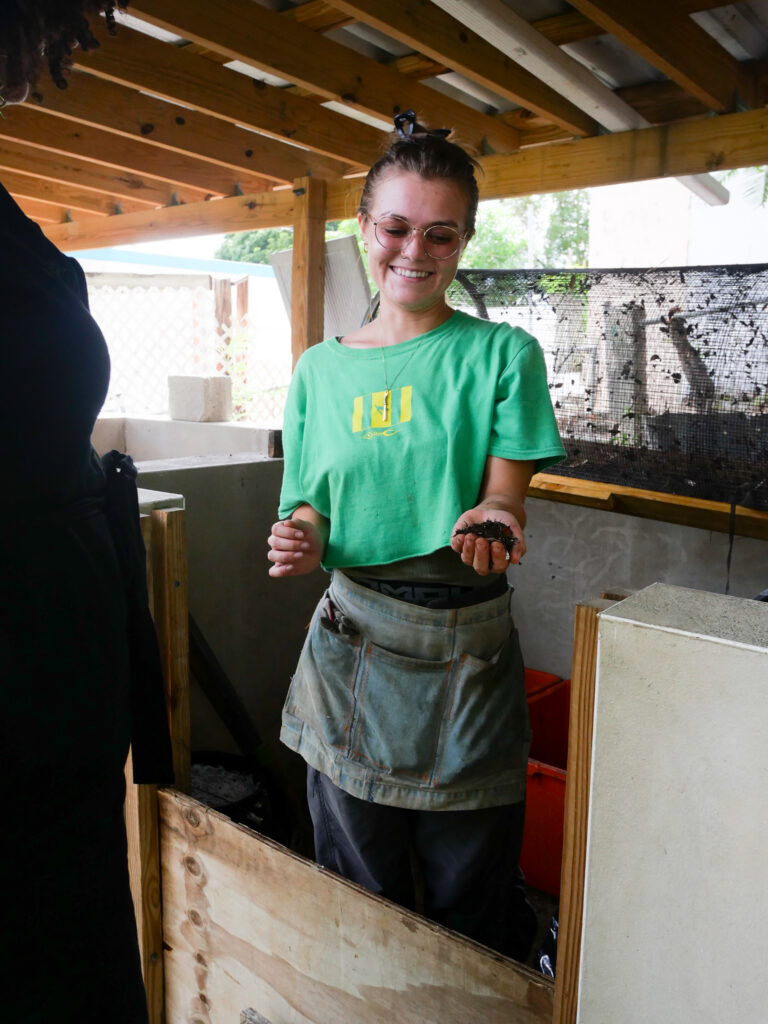
Display caption
Image: Mujeres de Islas member, Marissa Otero, explains the Mujeres de Islas compost project. Credit: Max Hernandez-Webster.
The conversation concludes by reaffirming MDI’s mission through Dulce’s shared metaphor of the archipelago: with each project, initiative, and dream, we are committed to self-management through transformative education, seeking a more sustainable and peaceful future. By weaving these cays and islands together with art, and believing that art can change the world, we fulfill our vision of fostering the just and dignified development of Culebra.
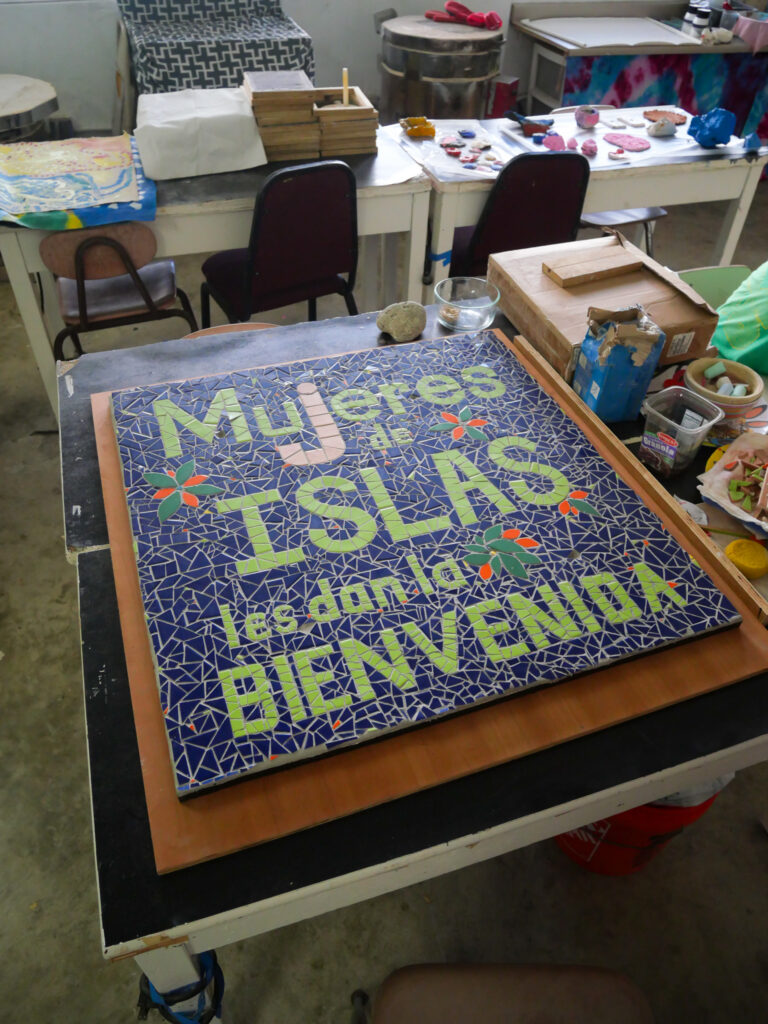
Display caption
Image: A Mujeres de Islas mosaic sign in their ceramic studio space. Credit: Max Hernandez-Webster.