
By Torhera Durand
“Back before God mehk mawnin,” the Ashanti and Akan people of West Africa wove stories of trickery and wisdom that carried their descendants through generations of hardship and triumph. For the people of the Caribbean and other descendants of enslaved Africans, these stories are more than just “folklore.” These stories tie us to a tradition that, through the tragedy of the Middle Passage, became almost entirely foreign to us.
This Black History Month, we honor these stories and how they became the bedrock of cultural storytelling in the U.S. Virgin Islands.
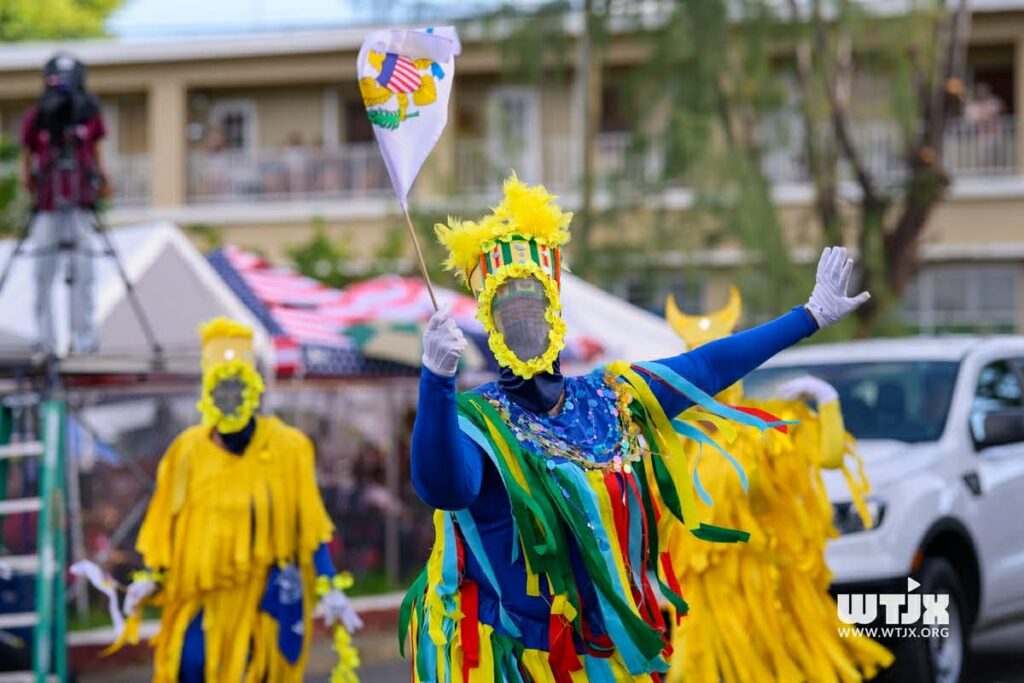
Display caption
Image: Stephanie Chalana Brown and “Keeping Masquerade Traditions Alive” Initiative at the 2026 Crucian Christmas Festival Children’s Parade. Credit: WTJX virgin Islands Public Broadcasting System.
Over 300 years ago, when tribal men and women of West Africa were shackled to the bellies of ships and sent off to the islands and continents of the “Western World”, they brought with them their stories, traditions, and folk heroes. Arguably, the most popular of these heroes is Kweku Ananse, more commonly known as Anansi the Spider or Bro Nansi here in the U.S. Virgin Islands.
Anansi is a beloved folk hero and renowned trickster who uses wit and deception to outsmart even the wisest of opponents, sometimes even causing mischief to himself. These Anansi stories, or Anansesems, go by many names depending on the region where you hear them, but the morals remain consistent throughout. Take, for instance, the tale known in West Africa as Anansi and the Eight Pots of Beans. In the Virgin Islands, we might call it How Anansi Got Eight Thin Legs or Why the Spider Has a Small Waist.
Regardless of the name, the story remains the same. Anansi, driven by greed, ties a string spun from his own web to his legs and abdomen, and gives the ends to different villagers so they can pull him when their feasts are ready. However, when every pot finishes at the same time, the competing tugs stretch his once-plump limbs and waist into the eight scrawny legs and the skinny abdomen that all spiders carry today.
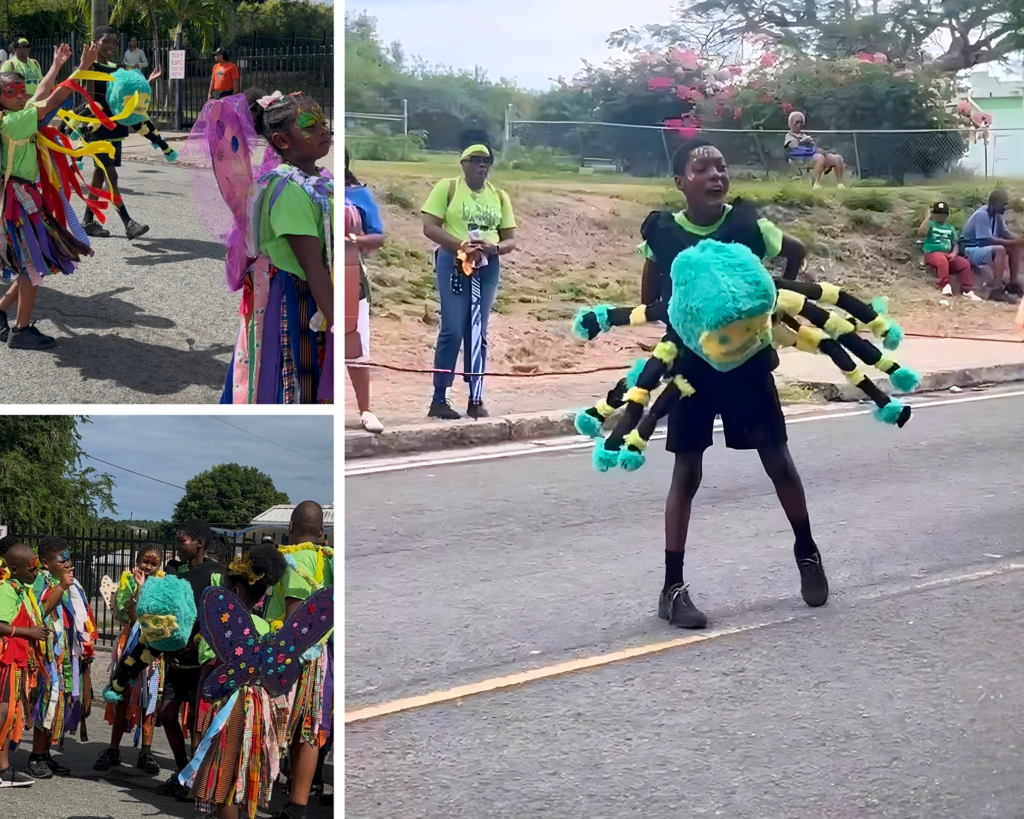
Display caption
Image: Anansi and the Storytellers Children’s Parade troupe performing Why the Spider Has a Small Waist. Credit: Sayeeda Carter.
During the 2026 Crucian Christmas Festival Children’s Parade, performing artist and cultural advocate Sayeeda Carter, alongside the Caribbean Museum Center for the Arts, brought this legend to the streets with the “Anansi and the Storytellers” troupe. In scene four of their act, they recounted the lesson: “Everybody gone learn a lesson one day or another, you know. Greed stretches the belly and it snaps the spirit, and he who want to eat from two feasts gone end up eating from none! And from that day, Anansi end up with a thin waist, because greed pull it so.”
These stories continue to survive the test of time because they exist for more than just childlike entertainment. They somehow explain the “hows” and “whys” of our world through a masterclass of morality and wisdom, sprinkled with just enough room for a deep belly laugh.
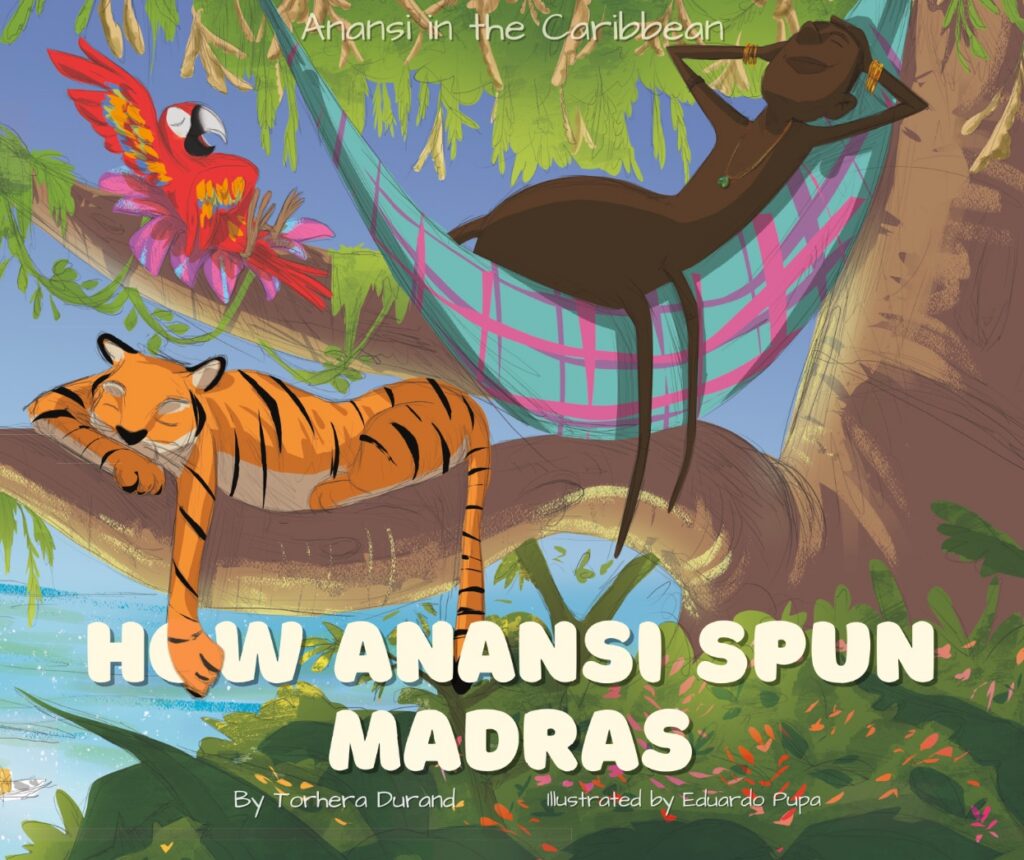
Display caption
Image: Cover of How Anansi Spun Madras hardcover book illustrated by Eduardo Pupa. Credit: Torhera Durand.
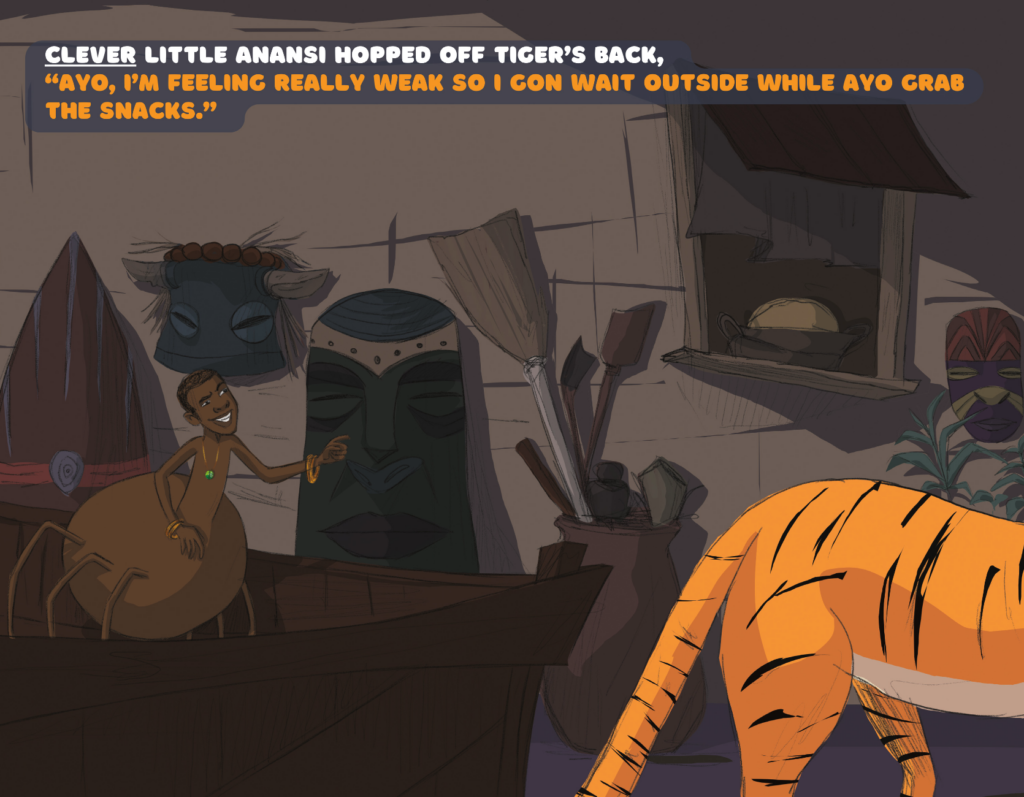
Display caption
Image: Interior page of How Anansi Spun Madras hardcover book illustrated by Eduardo Pupa. Credit: Torhera Durand
Today, Virgin Islanders like Sayeeda Carter, Yohance Henley, and myself, amongst others, are following in the footsteps of great Virgin Islands culture bearers like Leona Brady Watson, Arona Petersen, and Delta M. Dorsch. We are now capturing these traditionally orated stories in digital and physical forms to preserve this “web that never breaks.” As jovial and entertaining as these stories might be, we recognize that in them are held the seeds of trees that our ancestors hoped would grow into who we are today, and that the lessons they spun in each passage would guide us when we most needed them.
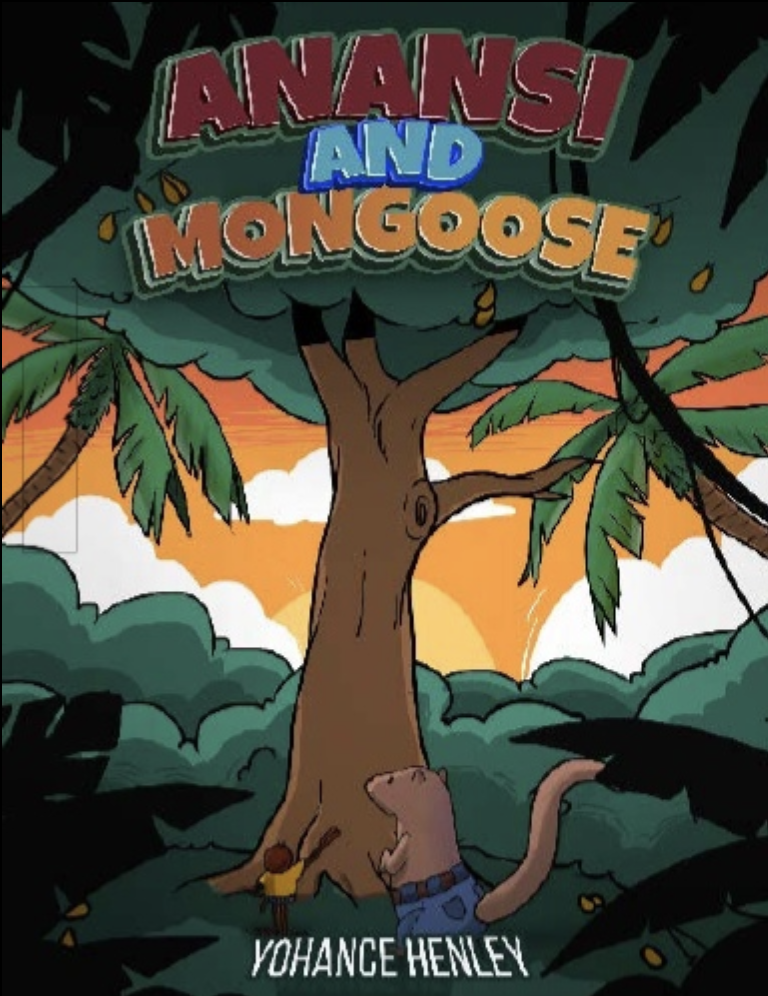
Display caption
Image: Cover of Anansi and Mongoose book by Yohance Henley. Credit: Yohance Henley.
So, as they say in the Virgin Islands, “Duh wheel bend and the story end. Take your pen and write your nenen.” But, if you don’t believe me, just take a trip to the Virgin Islands and see for yourself how these tales from the tribes of West Africa have made their way to the shores of the Virgin Islands, and became the foundation of our culture and identity today.
About the Author
Born and raised on the island of St. Croix to parents from the island nation of Dominica, Torhera Durand is an author and community leader dedicated to the cultural and economic growth of the U.S. Virgin Islands and the wider Caribbean. Her work is rooted in a deep respect for Caribbean history, culture, and traditions, and the belief that the stories of Caribbean people deserve to not only be preserved but highlighted in ways that allow them to endure for generations to come.
Having spent much of her life as a writer and performing artist, Torhera self-published her first children’s book in 2023, entitled How Anansi Spun Madras. This original trickster tale features the renowned folk hero Anansi the Spider and tells the story of how the Caribbean’s heritage fabric, Madras, came to be. Following the release of her book, she sought to provide that same opportunity to younger voices. Through a partnership with the non-profit Project Promise, she hosted the Young Author’s Program at the Cane Roots Art Gallery, where she mentored students through the writing, editing, and illustration process. This collaboration resulted in the release of their own trickster tale entitled, Anansi, Friends, and the Separation.
Torhera’s creative contributions are matched by her professional commitment to the territory’s economic stability. She currently serves as the Deputy to the Executive Director at the University of the Virgin Islands Research and Technology Park (UVI RTPark). In this role, she helps lead initiatives focused on sustainable economic development, working to build a more resilient and diversified economy for the people of the Virgin Islands.
Citations:
Courlander, H. (1976). A treasury of Afro-American folklore: The oral literature, traditions, recollections, legends, tales, songs, religious beliefs, customs, sayings and humor of peoples of African descent in the Americas. Crown Publishers.
Durand, T. (2022). How Anansi Spun Madras (E. Pupa, Illus.). Lulu Press. https://www.lulu.com/shop/torhera-durand-and-eduardo-pupa/how-anansi-spun-madras/hardcover/product-jg96qw.html?q=anansi&page=1&pageSize=4
Parables. (2020). Tales of Kweku Ananse: Three Tricky Tales of Kweku Ananse. Mountype Publishing.
Parables. (2020). Tales of Kweku Ananse: Three Tricky Tales of Kweku Ananse (Vol. 2). Mountype Publishing.